The problem.

Bettina came to me through Shopexperts in late January with a specific worry: her tracking pixels might be at risk of throttling, and she wanted to be sure Meta, Google, and her analytics were all receiving complete data. The brief was an audit plus the fixes — not just a report.
What had been tried.
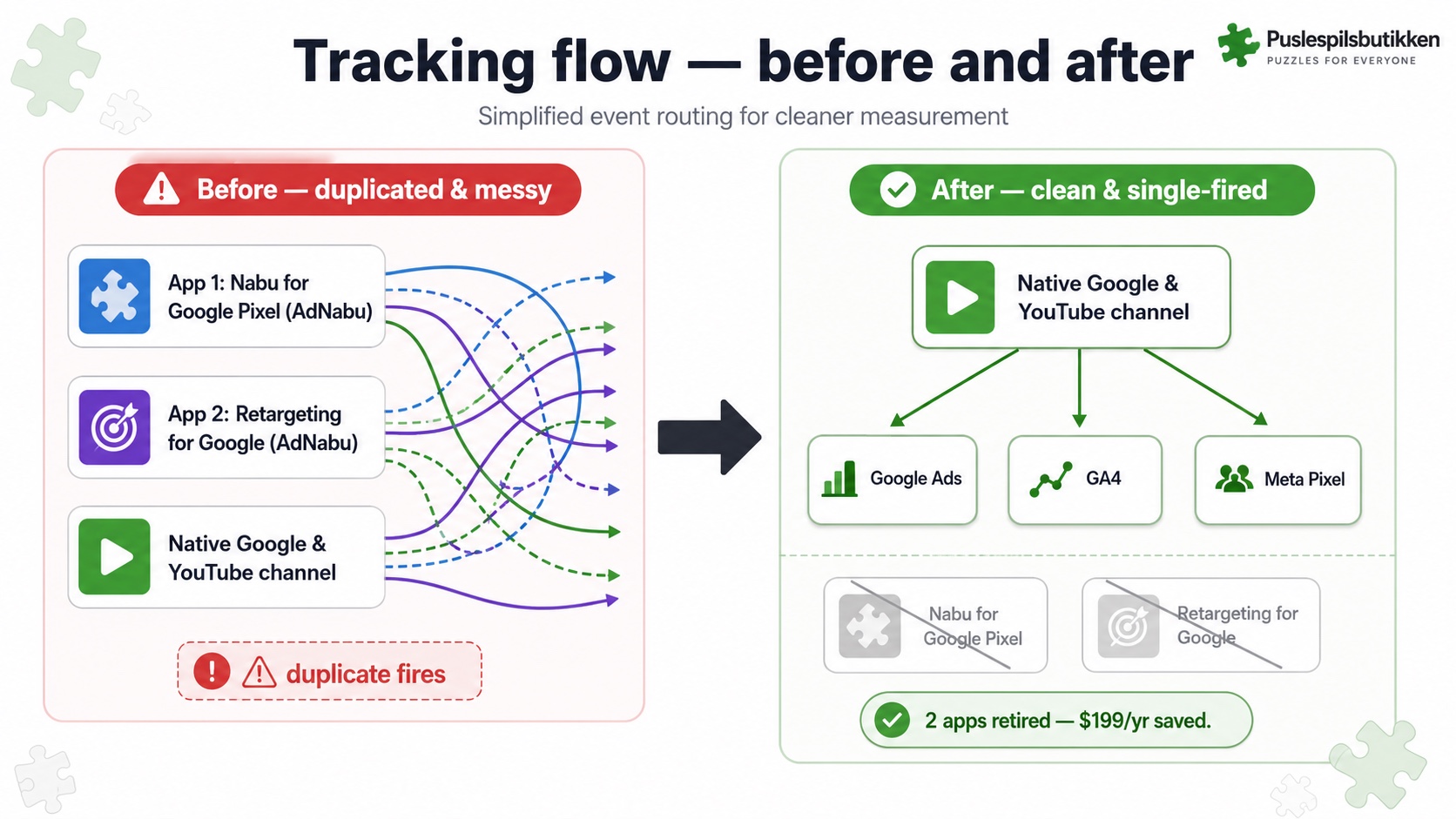
The store was already running two AdNabu apps — "Nabu for Google Pixel" and "Retargeting for Google" — to cover Google tracking and retargeting. In practice those apps were duplicating work the native Google & YouTube sales channel already does, which meant extra cost and the risk of duplicate event fires muddying the data.
The fix.
I audited the full tracking and attribution layer first. The pixels turned out to be working and not throttled — so the real work was elsewhere. I:
- Completed the Google tag migration, clearing the red-alert flag.
- Enabled Countries & languages sync in Merchant Center and switched on Customer Match with daily auto-sync to Google Ads.
- Verified GA4 end to end — every event flowing, no gaps — and verified the Meta Pixel Purchase match quality.
- Turned the Judge.me review widgets back on so social proof showed on the storefront.
Then I held off on the cost-saving step until the data proved it was safe. Rather than retire the two redundant apps the moment the native channel was live, I let the new setup run and watched the numbers for stability before greenlighting the uninstall — so the "fully stable, safe to remove" call was backed by real data, not assumption.
Before → after.
- Google tag — flagged for migration, red alert → migration completed, alert cleared.
- Tracking apps — two AdNabu apps duplicating the native Google channel → both retired after data confirmed stable.
- App spend — paying for redundant tracking → $199/year saved.
- Tag firing — duplicate fires risking data quality → every Google tag fires exactly once, no duplicates.
- Merchant Center — Countries & languages sync off → sync enabled.
- Customer Match — not running → enabled, with daily auto-sync to Google Ads.
- GA4 — unverified → verified, all events flowing, no data gaps.
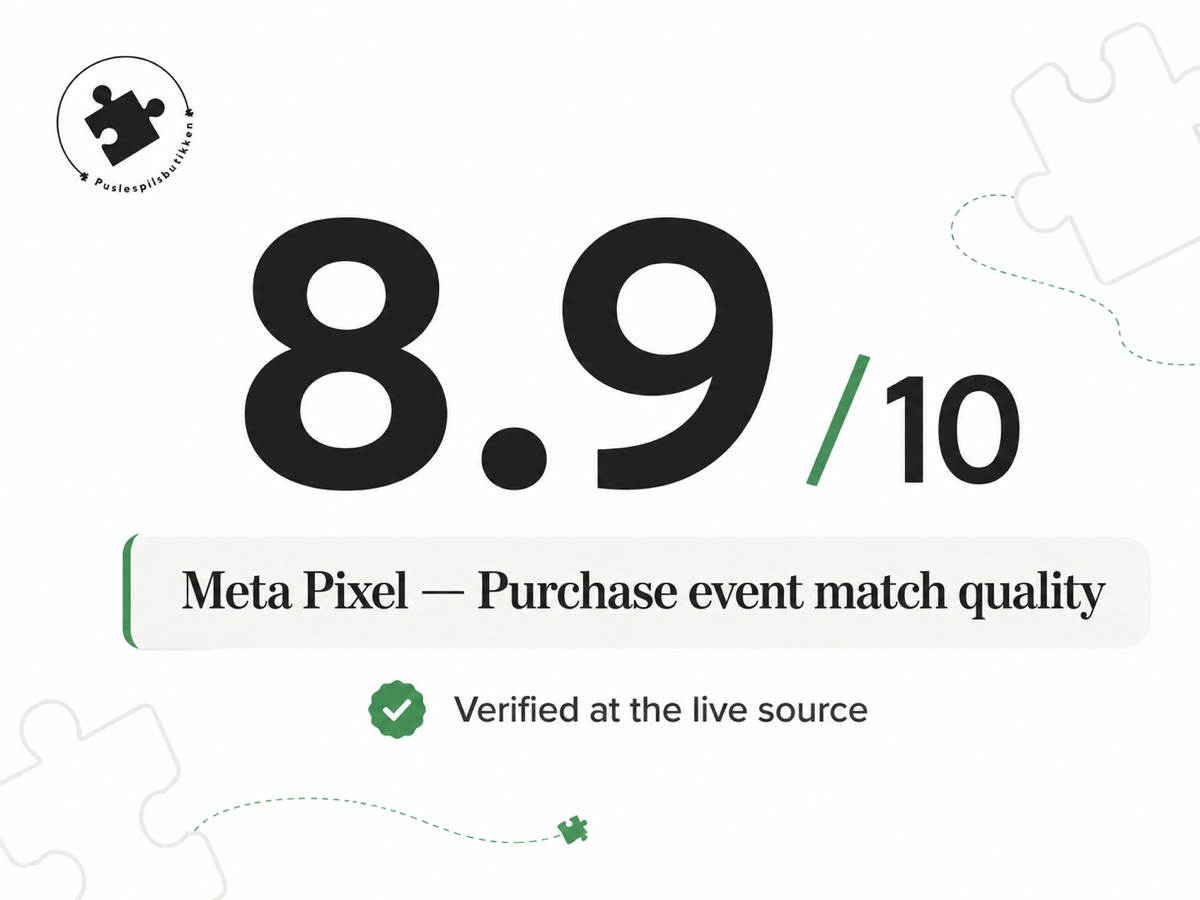
- Meta Pixel — unverified → verified, Purchase match quality 8.9/10.
- Judge.me reviews — widgets not showing → review widgets live on the storefront.
The results.
After two weeks of stable data, the picture was clean and confirmed at the live source (verified February 27, 2026):
- GA4: every event flowing end to end, with no data gaps.
- Google Ads: purchases and add-to-carts tracking cleanly, no missing conversions.
- Meta Pixel: Purchase match quality 8.9/10.
- Tag hygiene: every Google tag firing exactly once — no duplicates.
- $199/year saved by retiring the two redundant apps once the native channel was confirmed handling the job.

What this means for the business.
For a small retailer, redundant apps are a quiet leak — money out the door for setup the platform already handles, plus the risk that two tools double-counting the same event corrupt the numbers you make decisions on. Cleaning that up did two things at once: it lowered the fixed costs and it made the advertising data trustworthy. When Google Ads, Meta, and GA4 all receive complete, single-fired conversion data, every kroner of ad spend is measured against a true picture — so the store's marketing decisions rest on numbers that are actually correct, not inflated by duplicate fires.
How I verified this.
I didn't take "it looks fine" for an answer at any stage. The pixels were checked for actual throttling before I touched anything; GA4 events were confirmed flowing end to end; the Meta Pixel match quality was scored; and I waited two weeks of live data before declaring the redundant apps safe to remove. Every result above was confirmed at the live source, not assumed from the build.
She got tracking she can trust, a lower app bill, and a store whose marketing data finally tells the truth. BoxQuiz sells puzzles and games to Danish shoppers — and now runs on tracking that's clean, single-fired, and costs less to keep that way.
Published with Bettina's permission. The figures here are a dated verification snapshot taken February 27, 2026, not a live reading; volume figures are withheld at the merchant's request.